


Page 80 - C-Language
P. 80
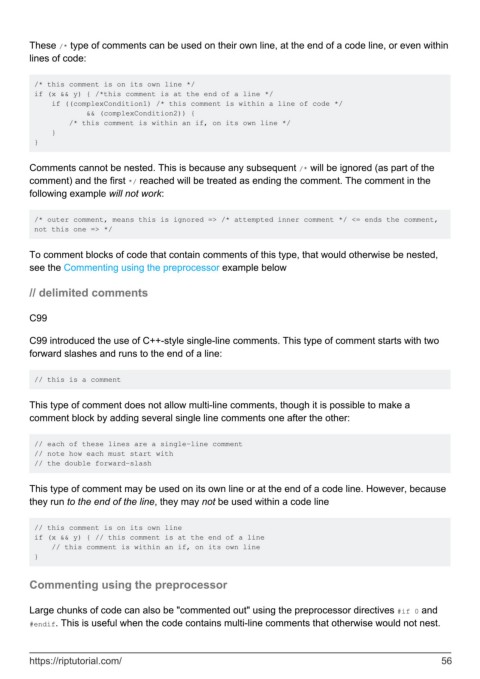
These /* type of comments can be used on their own line, at the end of a code line, or even within
        lines of code:


         /* this comment is on its own line */
         if (x && y) { /*this comment is at the end of a line */
             if ((complexCondition1) /* this comment is within a line of code */
                     && (complexCondition2)) {
                 /* this comment is within an if, on its own line */
             }
         }


        Comments cannot be nested. This is because any subsequent /* will be ignored (as part of the
        comment) and the first */ reached will be treated as ending the comment. The comment in the
        following example will not work:


         /* outer comment, means this is ignored => /* attempted inner comment */ <= ends the comment,
         not this one => */


        To comment blocks of code that contain comments of this type, that would otherwise be nested,
        see the Commenting using the preprocessor example below


        // delimited comments


        C99

        C99 introduced the use of C++-style single-line comments. This type of comment starts with two
        forward slashes and runs to the end of a line:


         // this is a comment


        This type of comment does not allow multi-line comments, though it is possible to make a
        comment block by adding several single line comments one after the other:


         // each of these lines are a single-line comment
         // note how each must start with
         // the double forward-slash


        This type of comment may be used on its own line or at the end of a code line. However, because
        they run to the end of the line, they may not be used within a code line


         // this comment is on its own line
         if (x && y) { // this comment is at the end of a line
             // this comment is within an if, on its own line
         }


        Commenting using the preprocessor


        Large chunks of code can also be "commented out" using the preprocessor directives #if 0 and
        #endif. This is useful when the code contains multi-line comments that otherwise would not nest.


        https://riptutorial.com/                                                                               56

