


Page 189 - C-Language
P. 189
double max_double(double, double);

         #define MAX(X, Y) _Generic((X)+(Y),                \
                                    int:      max_int,      \
                                    unsigned: max_unsigned, \
                                    default:  max_double)   \
                             ((X), (Y))


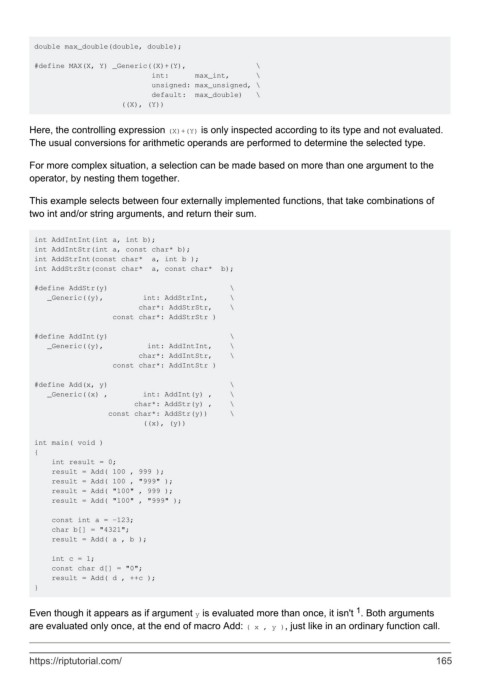
        Here, the controlling expression (X)+(Y) is only inspected according to its type and not evaluated.
        The usual conversions for arithmetic operands are performed to determine the selected type.

        For more complex situation, a selection can be made based on more than one argument to the
        operator, by nesting them together.

        This example selects between four externally implemented functions, that take combinations of
        two int and/or string arguments, and return their sum.


         int AddIntInt(int a, int b);
         int AddIntStr(int a, const char* b);
         int AddStrInt(const char*  a, int b );
         int AddStrStr(const char*  a, const char*  b);

         #define AddStr(y)                            \
            _Generic((y),         int: AddStrInt,     \
                                 char*: AddStrStr,    \
                           const char*: AddStrStr )

         #define AddInt(y)                            \
            _Generic((y),          int: AddIntInt,    \
                                 char*: AddIntStr,    \
                           const char*: AddIntStr )

         #define Add(x, y)                            \
            _Generic((x) ,        int: AddInt(y) ,    \
                                char*: AddStr(y) ,    \
                          const char*: AddStr(y))     \
                                  ((x), (y))

         int main( void )
         {
             int result = 0;
             result = Add( 100 , 999 );
             result = Add( 100 , "999" );
             result = Add( "100" , 999 );
             result = Add( "100" , "999" );

             const int a = -123;
             char b[] = "4321";
             result = Add( a , b );

             int c = 1;
             const char d[] = "0";
             result = Add( d , ++c );
         }


                                                                                         1
        Even though it appears as if argument y is evaluated more than once, it isn't  . Both arguments
        are evaluated only once, at the end of macro Add: ( x , y ), just like in an ordinary function call.


        https://riptutorial.com/                                                                             165

