


Page 141 - C-Language
P. 141
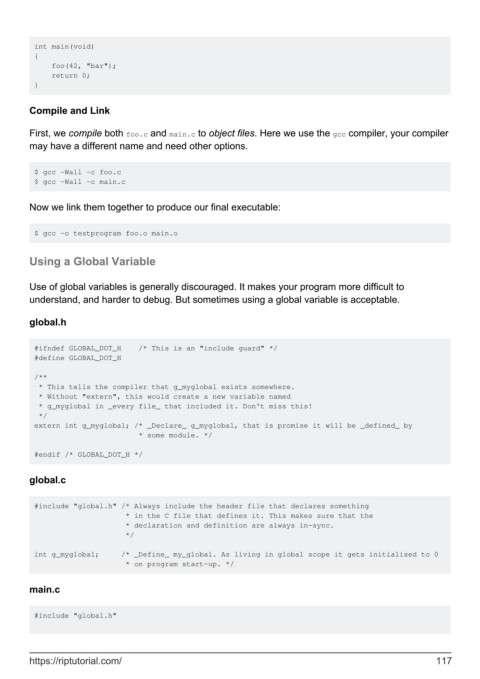
int main(void)
         {
             foo(42, "bar");
             return 0;
         }


        Compile and Link


        First, we compile both foo.c and main.c to object files. Here we use the gcc compiler, your compiler
        may have a different name and need other options.


         $ gcc -Wall -c foo.c
         $ gcc -Wall -c main.c


        Now we link them together to produce our final executable:


         $ gcc -o testprogram foo.o main.o


        Using a Global Variable


        Use of global variables is generally discouraged. It makes your program more difficult to
        understand, and harder to debug. But sometimes using a global variable is acceptable.

        global.h


         #ifndef GLOBAL_DOT_H    /* This is an "include guard" */
         #define GLOBAL_DOT_H

         /**
          * This tells the compiler that g_myglobal exists somewhere.
          * Without "extern", this would create a new variable named
          * g_myglobal in _every file_ that included it. Don't miss this!
          */
         extern int g_myglobal; /* _Declare_ g_myglobal, that is promise it will be _defined_ by
                                 * some module. */

         #endif /* GLOBAL_DOT_H */


        global.c


         #include "global.h" /* Always include the header file that declares something
                              * in the C file that defines it. This makes sure that the
                              * declaration and definition are always in-sync.
                              */

         int g_myglobal;     /* _Define_ my_global. As living in global scope it gets initialised to 0
                              * on program start-up. */


        main.c


         #include "global.h"


        https://riptutorial.com/                                                                             117

